Prayer Request for Benjamin Brochot:
Addressing Conflict, Dreams, and Doctrine!
Fair Use: Pro-Israel Content, Academic Content, Autistic Content:
The following text is an outline summation of the video dialogue only. For complete dialogue, please view video.
“Prayer Request For Benjamin Brochot” is a detailed overview of the differences between Nazarene Israel and French Messianic minister Benjamin Brochot. Nazarene Israel explores the importance of the Matthew 18 Process, the dangers of relying on personal dreams for doctrine, and the distinction between Messianic and Nazarene beliefs.
Introduction: A Call for Prayer and Focus
The video opens with an earnest plea for prayer and a reminder of the distractions that can deter believers from their spiritual focus. Norman Willis emphasizes the need to seek the Kingdom of Elohim first, functioning together on a single foundation to please the King.
Mattityahu (Matthew) 13:33
33 “But seek first the kingdom of Elohim and His righteousness, and all these things shall be added to you.”
- Unified on a single foundation.
- Works together to please the King.
A core theme is established early on: true discipleship requires actively embracing and modeling the Master’s teachings through discipline and obedience, not just acquiring knowledge.
AI Overview:
A disciple is a devoted follower or student of a teacher, leader, or philosophy.
It goes beyond just learning information;
it means actively embracing the master’s teachings and modeling your life after their example.
- Someone who disciplines himself to do what Yahweh and Yeshua say to do—hopefully out of love for Elohim—but if not out of love, then at least out of genuine fear.
Messianic Israel vs. Nazarene Israel
A critical distinction is drawn between “Messianic Israel” and “Nazarene Israel”.
Messianic Israel is characterized by learning and individualism. Conversely, Nazarene Israel is defined by entering into Yeshua’s Renewed Covenant through discipline, obedience, courage, and unity, built upon a single foundation of apostles, prophets, and elders.
Norman asks for prayers that both Ephraim and Judah will recognize the necessity of doing what Scripture dictates, in the exact manner Scripture requires.
The History of the Conflict with Benjamin Brochot
The central issue addressed is the ongoing problems with a ‘former’ Nazarene Israel representative, Benjamin Brochot, and his wife, Yanzhong.
The couple originally left the Messianic Kabbala movement (in 2022) to follow Nazarene Israel, bringing some Kabbalistic influences with them.
Benjamin was initially trained to be a branch leader for the Francophonie region. However, he departed after just five months, rejecting the organization’s high standards and expecting special treatment.
Benjamin’s Letter of Resignation:
“I agree that we need a structure to achieve Melchizedekian priesthood and five-fold ministry… [but]… I don’t think you received the gift of leadership. That’s why I will follow your teachings, but not your leadership anymore.”(Paraphrase: “I am going to rip off your studies, behave Messianic, and call myself a Nazarene.”)
Critically, Benjamin ignored multiple requests to engage in a “Matthew 18 process” to resolve grievances and maintain unity.
Following his departure, Benjamin formed a new French Messianic group, which he confusingly labeled “Nazarene”, but subsequently broke away from them in January 2026, again refusing the Matthew 18 reconciliation process.
Leadership Transitions and Unwarranted Attacks
When the new leaders of the French group, Valmir and Jérôme, chose to officially affiliate with Nazarene Israel, Benjamin began a sustained campaign of attacks against Valmir, Jerome, and Nazarene Israel.

Benjamin exhibits a “victim mentality,” blaming his own failures entirely on Valmir. Benjamin does not take responsibility for his own actions, and blames others for his things caused by his own behavior.
Benjamin’s Email to the French Group:
“Today, I have no hope left for Valmir and Jérôme; to me, they are pagans—strangers. They helped destroy the relationship between Oscar and me, and the relationship I had with Norman—already fragile—is now broken for good….”
A specific point of contention involves marital status and servant leadership. Benjamin wrongly asserted that only married men can serve as elders or deacons, aggressively pushing Valmir to marry. Valmir declined, preferring to wait for Yahweh’s timing.
Benjamin’s Email to the French Group:
“I decided to help Valmir become a pastor, but since he was unmarried, I also repurposed my YouTube channel and website to help him meet a Nazarene woman. “I felt it was both necessary and biblical for him to establish a home before aspiring to become the pastor of a physical congregation…
“Several women came forward, but he never wanted to try meeting even one of them.”
Benjamin teaches an incorrect understanding of 1 Timothy 3 and Titus 1, asserts incorrect requirements upon Valmir, and then attacks Valmir for not wanting to marry women he, Benjamin, presents to him, for the sole purpose of acquiring a leadership position.
1Ti 3:2, 12
3 A bishop then must be blameless, the husband of one wife [“a one-woman man“], temperate, sober-minded, of good behavior, hospitable, able to teach;
12 Let deacons be the husbands of one wife [“a one-woman man“], ruling their children and their own houses well.Titus 1:6
6 if a man is blameless, the husband of one wife [“a one-woman man“], having faithful children not accused of dissipation or insubordination.
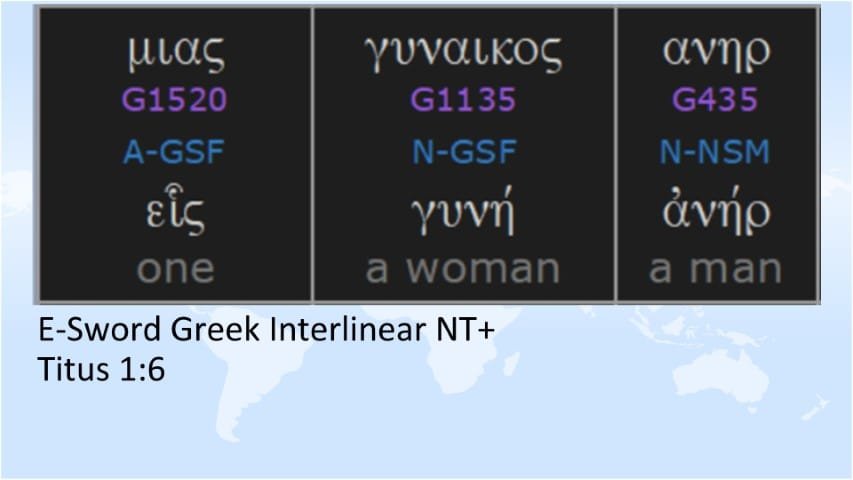
Norman Willis clarifies that servant leadership is not based on a rigid checklist but rather on high ideals of morality, ethics, and spiritual discernment—qualities Valmir allegedly demonstrates while Benjamin does not.
Further attacks from Benjamin Brochot
Due to Benjamin’s unjustified, unscriptural attacks against Valmir, the French branch, and Nazarene Israel, we published another study on “Servant Leadership, Matthew 18 and Unity, and Marital Status”.
This study further explains the ‘true’ requirements for servant leadership and clarifies why the doctrine taught by Benjamin Brochot is incorrect (and theologically horrible), and to rebuke Benjamin’s attacks against brother Valmir, who had done nothing wrong by refusing to be coerced into marriage.
After publishing our video on servant leadership requirements, Benjamin increased his attacks against Valmir. Benjamin blames Valmir for all of his failures and savaged Valmir and Jerome with unsupported accusations.
Benjamin’s projections onto Valmir and Jerome:
“…Yet even that victory and destruction weren’t enough for them. It shows that their intention was never to follow the Matthew 18 process; their motivation was born of pure hatred and focused explicitly on my destruction. The scandals multiplied, and their thirst for (spiritual) murder remains unquenched.”“… The crime committed by Valmir and Jérôme is truly heinous. These men resorted to public slander by spreading falsehoods about me. They sought to destroy rather than build.“…I chose to leave the assembly [without a proper Matthew 18], as it was clear to me that they had lost the Holy Spirit.”
The Danger of Psychological Projection and “Prophetic” Dreams
To explain Benjamin’s persistent public slander and accusations, the video delves into the psychological concept of projection. Psychological projection is an unconscious defense mechanism where a person attributes their own unacceptable traits or feelings onto others to avoid confronting their own flaws.
AI Overview:
Psychological projection is an unconscious defense mechanism where a person attributes their own unacceptable thoughts, feelings, or traits onto someone else. By deflecting internal discomfort outward, the individual avoids confronting their own flaws, preserving their self-esteem but often damaging relationships and distorting reality.
Furthermore, a lack of self-awareness—a trait only 10 to 15% of people genuinely possess—exacerbates these issues.
Harvard Business Review:
“In our nearly five-year research program on the subject, we’ve discovered that although 95% of people think they’re self-aware, only 10 to 15% actually are.”
Benjamin and his wife claim to be prophets, utilizing their personal dreams to justify their actions and doctrinal judgments.
Yehudah (Jude) 1:8
8 …Likewise also these dreamers defile the flesh, reject authority, and speak evil of dignitaries.
Benjamin explicitly cited dreams as his justification for viewing Valmir’s foundations as flawed and asserting his own authority. (Benjamin believes his dreams justify his anti-biblical behavior and actions.)
From Benjamin’s latest attacks, justifying his libel because of a dream:
“When I first met Valmir, I had a dream about him; this will explain a great deal. Here it is…
I am driving Valmir to a location in a car I have chosen…”
The video counters this by citing Kepha Bet (2 Peter) 1:20, which states that no prophecy of Scripture is of private interpretation. It also provides an AI overview of dreaming, explaining that dreams are merely internal biological mechanisms for processing complex emotions, stress, and memories, rather than divine directives.
Kepha Bet (2 Peter) 1:20
20 knowing this first, that no prophecy of Scripture is of any private interpretation,
Becca Biderman’s ‘Orange Glow’ prophecy
The video shares Becca’s Biderman’s published dream as a second example of Messianic ministers who believe their personal dreams are prophetic and declare judgment over other individuals. Norman explains that when people share dreams that have no Scriptural foundation, or out-right contradict Scripture, these are not from Yahweh Elohim.
False Prophets and Religious Delusions
The script issues a stern warning against relying on dreams, referencing Yirmeyahu (Jeremiah) 23:32 to condemn those who prophesy false dreams and lead people astray.
Kepha Bet (2 Peter) 1:20
20 recognizing this above all, that every prophecy of scripture does not come about from one’s own interpretation…From Benjamin’s Latest Attacks on Valmir:
“…In my first prophecy concerning you, Valmir, I saw that the foundation of your work was flawed, and I must point out those weaknesses to you….”
“…Yanzhong was unaware of how Valmir was treating me, yet the Spirit seemed to prompt her to prophesy that my authority should be respected…”
“In my second prophetic dream, I saw that Valmir was being held back and that Jérôme was not yet ready…”Yirmeyahu (Jeremiah) 23:32
32 Behold, I am against those who prophesy false dreams,” says Yahweh, “and tell them, and cause My people to err by their lies and by their recklessness. Yet I did not send them or command them; therefore they shall not profit this people at all,” says Yahweh.
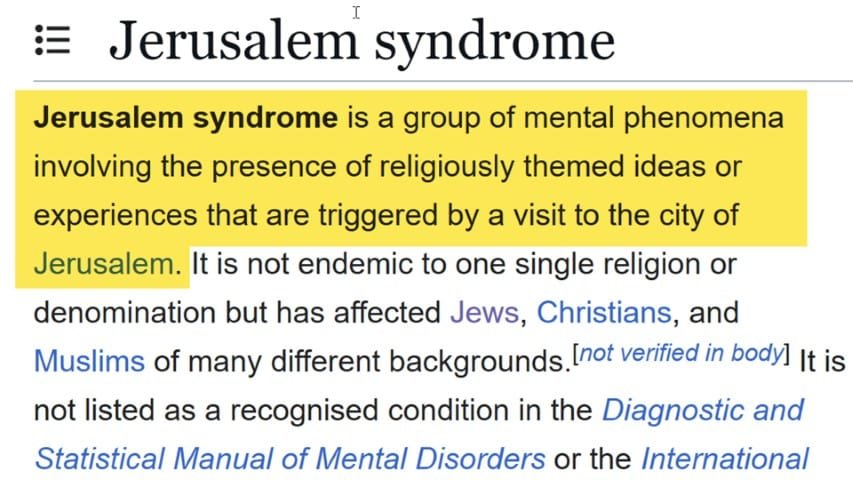
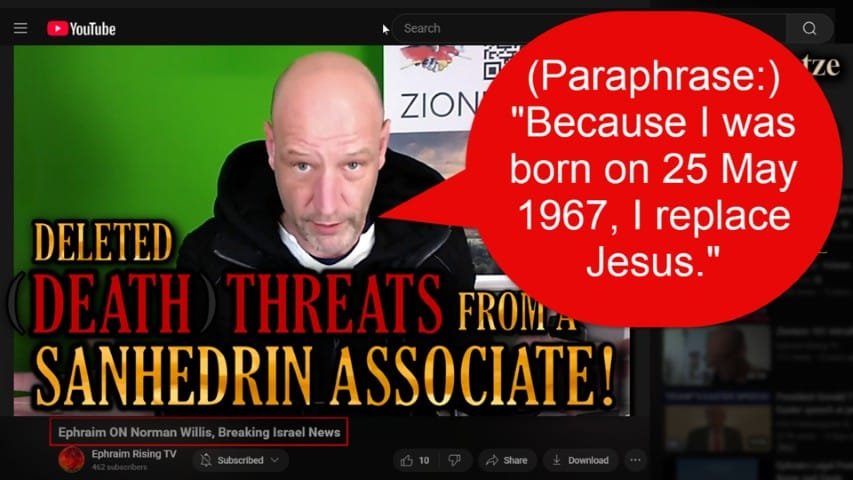
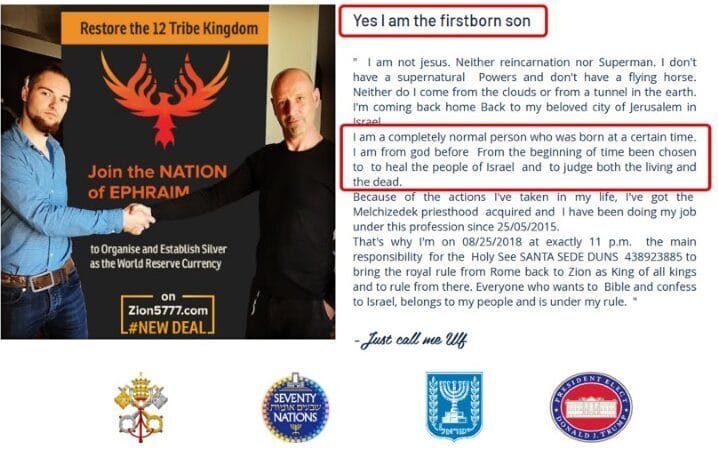
Norman also brings up the extreme example of Ulf Diebel, who claims to be the “firstborn son” and ruler of Zion, as a cautionary tale of “Jerusalem syndrome” and religious delusion.
Yochanan Aleph (1 John) 4:1
1 Beloved, do not believe every spirit, but test the spirits, whether they are of Elohim; because many false prophets have gone out into the world.
- There are different spiritual voices.
- Test them by Scripture.

More Scripture concerning dreams:
Norman exhorts believers to “test the spirits” by Scripture, rather than blindly trusting every spiritual voice or dream. Because there are many spiritual voices, and the only way to be spiritually safe is to test each spirit according to what Yahweh’s word says.
Yoel (Joel) 2:28
28 “And it shall come to pass afterward That I will pour out My Spirit on all flesh; Your sons and your daughters shall prophesy, Your old men shall dream dreams, Your young men shall see visions.”Ma’asei (Acts) 2:17
17 “And it shall come to pass in the last days, says Elohim, that I will pour out my Spirit on all flesh; your sons and your daughters shall prophesy, your young men shall see visions, and your old men shall dream dreams.”
Not every dream from every individual is a prophecy from Yahweh. Scripture says that multitudes of dreams is vanity. In Jeremiah, Yahweh warns us that there are some who call themselves prophets and diviners, who cause their own dreams, and deceive many by their dreams.
Qohelet (Ecclesiastes) 5:7
7 For in the multitude of dreams and many words there is also vanity. But fear Elohim.Yirmeyahu (Jeremiah) 29:8
8 “For thus says Yahweh of hosts, the Elohim of Israel: Do not let your prophets and your diviners who are in your midst deceive you, nor listen to your dreams which you cause to be dreamed.”Yirmeyahu (Jeremiah) 23:32
32 Behold, I am against those who prophesy false dreams,” says Yahweh, “and tell them, and cause My people to err by their lies and by their recklessness. Yet I did not send them or command them; therefore they shall not profit this people at all,” says Yahweh.Ecclesiastes 5:3 (LEX)
3 For a dream comes with many cares, and the voice of a fool with many words.כִּי בָּא הַחֲלוֹם בְּרֹב עִנְיָן | וְקוֹל כְּסִיל בְּרֹב דְּבָרִים:
Dreams are very often simply a way of working through our personal experiences while sleeping. Believers should cautiously examine s0-called ‘prophetic’ dreams and whether or not they match Scripture.
Strong’s Hebrew Concordance H6031
עָנָה‛ânâh aw-naw’
A primitive root (possibly rather identical with H6030 through the idea of looking down or browbeating); to depress literally or figuratively, transitively or intransitively (in various applications). (sing is by mistake for H6030.): – abase self, afflict (-ion, self), answer….AI Overview
Experts believe that processing emotions and stress is one of the main functions of dreaming. While you sleep, your brain acts as an internal processor, using the dream state to work through complex feelings, consolidate memories, and manage experiences you couldn’t fully process during the day. Several biological and psychological theories explain how this works:Emotional Rehearsal: The brain enters a state of emotional disinhibition while you dream. The highly emotional parts of the brain (like the limbic system) are very active, while logic-controlling areas (like the prefrontal cortex) are turned down. This lets your mind safely explore and “practice” feelings in different imagined contexts.
Nocturnal Therapy: Dreaming provides a space to work through trauma, stress, and grief without the constraints of waking reality. If an emotion is particularly overwhelming, it gets stored in the subconscious and often surfaces during vivid or “stress” dreams to help you process it.
Norman highlights a message that Benjamin Brochot wrote to Nazarene Israel in 2022, stating that he [Benjamin] and his wife [Yanzhong] sometimes receive messages that do not come from Yahweh.
Due to Benjamin’s and Yanzhong’s past connections with Kabbalah, it is possible that spirits of Kabbalah continue influencing Benjamin and Yanzhong.
Letter from Benjamin, in 2022:
…So I needed a sign, a confirmation from Elohim. The decision must be in accordance with his will… I am very careful not to let my flesh speak, because Yanzhong and I sometimes received messages, but that was not from Yahweh.(Kabbalah.)
Norman warns that there is danger is making claims that Yahweh gives us a message or a dream when it is not of Him. And if the fruits of the Spirit are contradictive to Yahweh’s fruits of the Spirit, then that is not of Yahweh.
Devarim (Deuteronomy) 18:20
20 “But the prophet who presumes to speak a word in My name, which I have not commanded him to speak, or who speaks in the name of other elohim, that prophet shall die.'”
Conclusion: Specific Prayer Requests
The video concludes with highly specific prayer requests for the community and for Benjamin Brochot and his wife Yanzhong.
- Prayers are requested that Benjamin and Yanzhong will stop calling themselves Nazarenes while behaving like Messianics.
- The community is asked to pray that Benjamin and Yanzhong cease their persecution of the new French branch leaders.
- Prayers are needed for Benjamin and his wife to realize they are not prophets, do not understand doctrine, and that they need to repent.
- That they will ask Yahweh for help to get rid of Kabbala, and submit to Romans 13, and to the Matthew 18 Process.
- Finally, believers are challenged to take their betrothal to Yeshua seriously, prioritizing His kingdom and strictly following His Word over their own individual desires or perceived prophetic dreams.
Mattityahu (Matthew) 5:11-12
11 “Blessed are you when they revile and persecute you, and say all kinds of evil against you falsely for My sake.
12 “Rejoice and be exceedingly glad, for great is your reward in heaven, for so they persecuted the prophets who were before you.”
Shalom.
Support the Great Commission on PayPal
Support the Great Commission on Patreon