Michael Rood: What About These Verses?
Fair Use: Pro-Israel Content, Academic Content, Autistic Content:
The following text is an outline summation of the video dialogue.
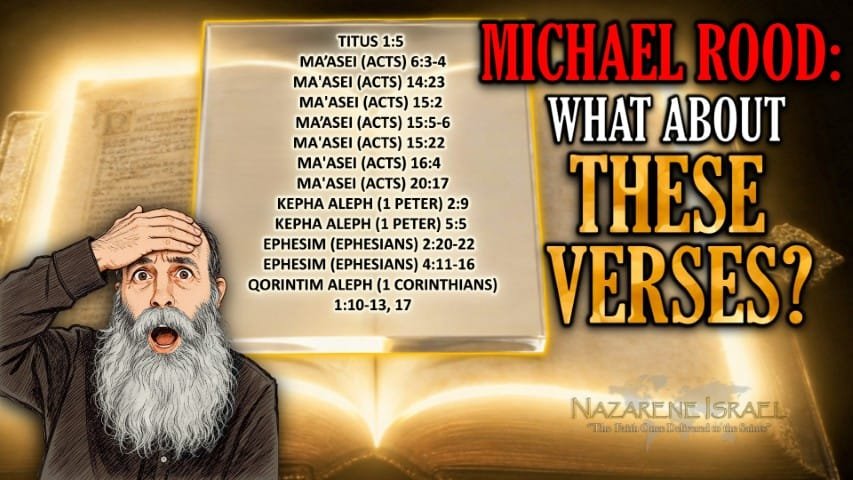
“Michael Rood: What About These Verses?” presents Norman Willis’s biblical critique of Michael Rood’s teachings on religious hierarchy, Nicolaitanism, and the crucial need for a standing priesthood in the Messianic movement. It includes multiple Tanach and Renewed Covenant passages that prove organization, unification, and ordered structure are required, contrary to what many popular Messianic preachers claim. It is a call for independent messianic ministries to stop perverting doctrine, and to stop promoting fragmentation, disorder, and rebellion against Elohim’s kingdom.
“Michael Rood: What About These Verses?” Lesson Plan:
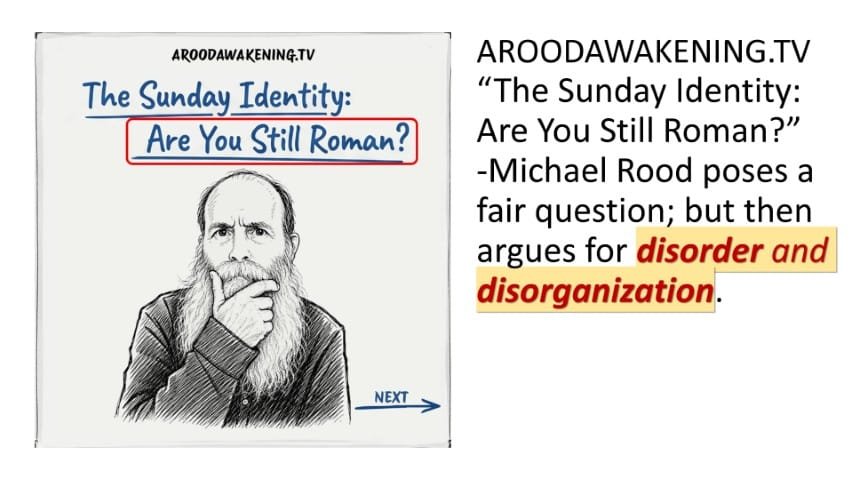
1. Show how Michael Rood of “A ROOD AWAKENING” calls for disorganization and disorder (even anarchy).
2. Show How the Renewed Covenant calls for order and organization (i.e., loving servant-patriarchy).
3. Break down Michael Rood’s teaching advocating disorganization and anarchy in detail.
4. Ask for your prayers for Michael Rood’s repentance.
Introduction: Addressing the Call for Spiritual Anarchy
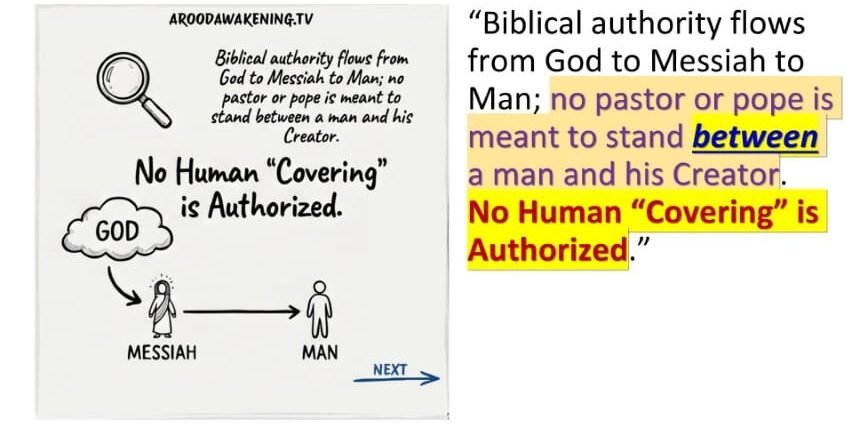
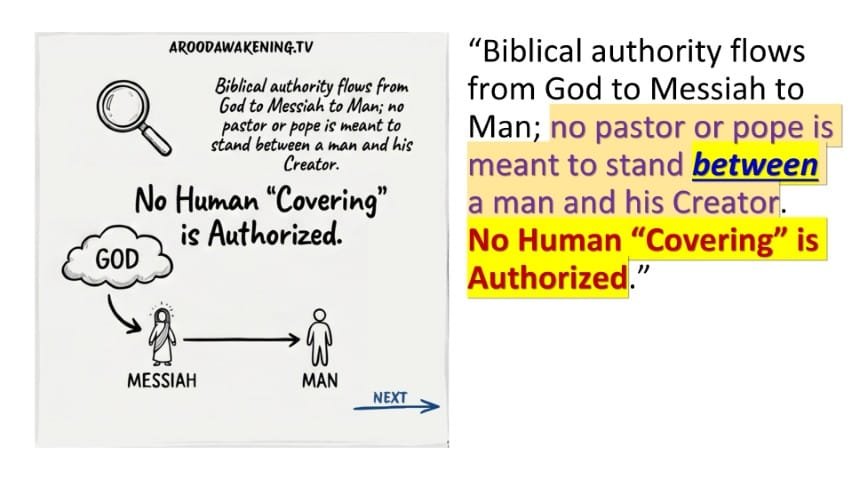
In a thorough and direct response video from Nazarene Israel, Norman Willis addresses recent teachings by prominent Messianic evangelist Michael Rood. Grounding his approach in Leviticus 19:17—which commands believers to lovingly correct a brother to prevent the spread of sin—Willis takes issue with Rood’s claim that “no human covering is authorized” between believers and their Creator. Willis argues that rather than liberating believers from Rome, abolishing leadership promotes spiritual anarchy and ignores the biblical mandate for a standing, organized priesthood.
Vayiqra (Leviticus) 19:17-18
17 You shall not hate your brother in your heart. You shall surely rebuke [correct] your neighbor, and not bear sin because of him.
18 You shall not take vengeance, nor bear any grudge against the children of your people, but you shall love your neighbor as yourself: I am Yahweh.Mishle (Proverbs) 27:17
17 As iron sharpens iron, So a man sharpens the countenance of his friend.
The Debate Over Nicolaitanism
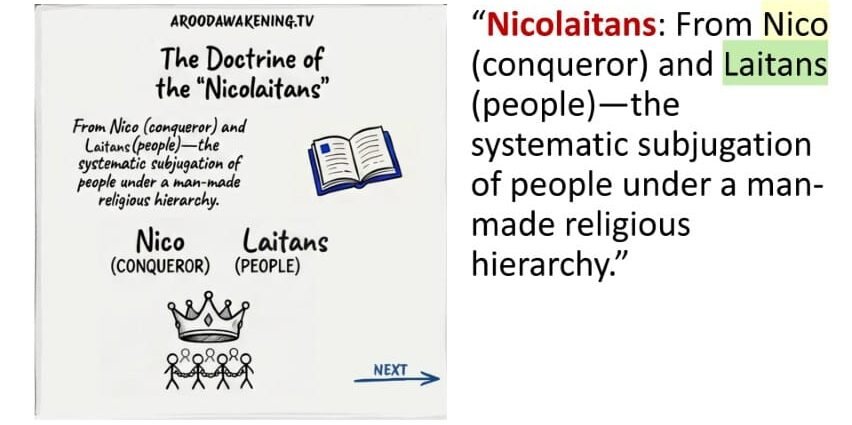
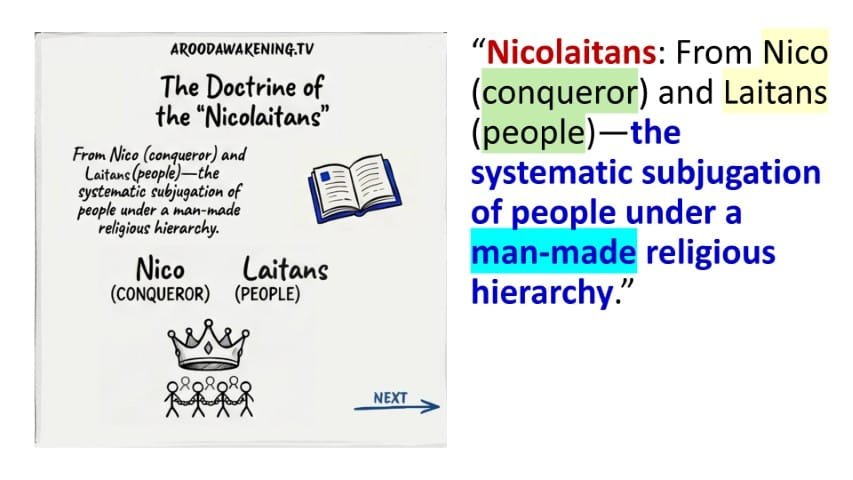
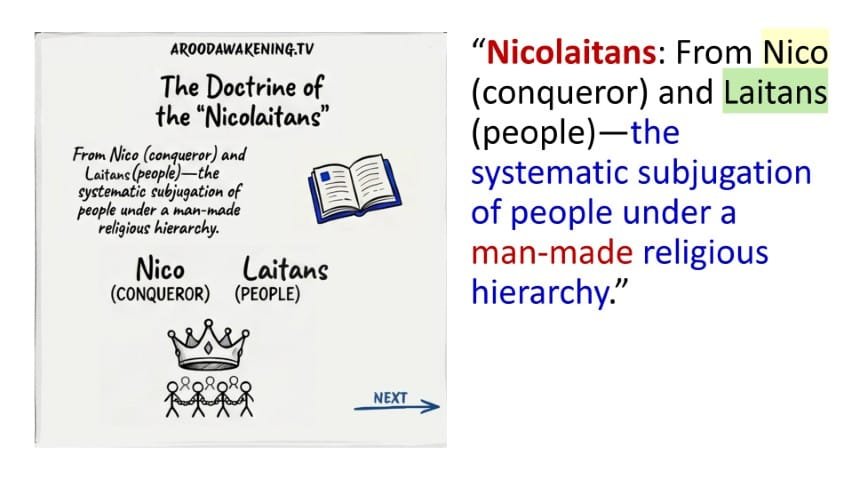
A major point of the study is the definition of “Nicolaitanism” (referenced in Revelation 2). Rood interprets this term as the “systematic subjugation of people under a man-made religious hierarchy,” suggesting that pastoral or apostolic authority is inherently oppressive and unbiblical.
Hitgalut (Revelation) 2:6
6 “But this you have, that you hate the deeds of the Nicolaitans, which I also hate.”Hitgalut (Revelation) 2:14-15Strong’s Greek Concordance G3531
Νικολαΐ́της Nikolaitēs nik-ol-ah-ee’-tace
From G3532; a Nicolaite, that is, adherent of Nicolaus: – Nicolaitane.Strong’s Greek Concordance G3532
Νικόλαος Nikolaos nik-ol’-ah-os
From G3534 and G2004; victorious over the people; Nicolaus, a heretic: – Nicolaus.Strong’s Greek Concordance G3534
νῖκος nikos nee’-kos
From G3529; a conquest (concretely), that is, (by implication) triumph: – victory.
Willis strongly opposes this view. Using historical and linguistic sources like Thayer’s Greek Lexicon, Willis argues that the doctrine of the Nicolaitans is actually synonymous with the doctrine of Balaam. Rather than representing structured leadership, Nicolaitanism is the subversion and destruction of the people by encouraging false liberties—such as eating meat sacrificed to idols and engaging in sexual immorality.
14 “But I have a few things against you, because you have there those who hold the doctrine of Bilaam, who taught Balak to put a stumbling block before the children of Israel, to eat things sacrificed to idols, and to commit sexual immorality.
15 “Thus you also have those who hold the doctrine of the Nicolaitans, which thing I hate.”
Strong’s Greek Concordance G2004
ἐπιτάσσω epitassō ep-ee-tas’-so
From G1909 and G5021; to arrange upon, that is, order: – charge, command, injoin.Strong’s Greek Concordance G3531
Νικολαΐ́της Nikolaitēs Thayer Definition:
Nicolaitans = “destruction of [the] people”
1) a sect mentioned in Rev_2:6,Rev_2:15, who were charged with holding the error of Balaam, casting a stumbling block before the church of God by upholding the liberty of eating things sacrificed to idols as well as committing fornication…Blue Letter Bible:
Thayer’s Greek Lexicon: STRONGS G3531:
Νικολαΐτης, Νικολαιτου, ὁ, a follower of Nicolaus, a Nicolaitan: plural, Revelation 2:6, 15 — a name which, it can scarcely be doubted, refers symbolically to the same persons who in Revelation 2:14 are charged with holding τήν διδαχήν Βαλαάμ, [the teaching of Balaam]……i. e. after the example of Balaam, casting a stumbling-block before the church of God (Numbers 24:1-3) by upholding the [wrong] liberty of eating things sacrificed unto idols as well as of committing fornication…
…for the Greek name Νικόλαος coincides with the Hebrewבִּלְעָם according to the interpretation of the latter which regards it as signifying destruction of the people. See in Βαλαάμ…
Albert Barnes notes:
“Vitringa supposes that the word is derived from νικος, victory, and λαος, people, and that thus it corresponds with the name Balaam, as meaning either lord of the people, or he destroyed the people…”
[Wikipedia]“…and that, as the same effect was produced by their doctrines as by those of Balaam, that the people were led to commit fornication and to join in idolatrous worship, they might be called Balaamites or Nicolaitanes—that is, corrupters of the people.
[Wikipedia]
Scriptural Evidence for Biblical Hierarchy
Willis points out that asserting “no human covering is authorized” directly contradicts dozens of passages in the Renewed Covenant (New Testament). He emphasizes that Yahweh is an Elohim of order, and the original first-century faith relied heavily on organization.
The Role of Elders and Overseers
To counter Rood’s claims, Willis cites Hebrews 13:17, which explicitly instructs believers to “obey those who rule over you, and be submissive, for they watch out for your souls.” Furthermore, 1 Peter 5 and Titus 1 command the appointment of elders (Zakenim) to shepherd the flock. These leaders are not meant to act as spiritual dictators, but as appointed overseers who lead by example and provide necessary spiritual covering.
Kepha Bet (2 Peter) 2:10
10 …and especially those who walk according to the flesh in the lust of uncleanness and despise authority. They are presumptuous, self-willed. They are not afraid to speak evil of dignitaries…Ivrim (Hebrews) 13:17
17 Obey those who rule over you, and be submissive, for they watch out for your souls, as those who must give account. Let them do so with joy and not with grief, for that would be unprofitable for you.Kepha Aleph (1 Peter) 5:1-2
1 The elders who are among you I exhort, I who am a fellow elder and a witness of the sufferings of Mashiach, and also a partaker of the glory that will be revealed:
2 Shepherd the flock of Elohim which is among you, serving as overseers, not by compulsion but willingly, not for dishonest gain but eagerly…Kepha Aleph (1 Peter) 5:3-4
3 nor as being lords over those entrusted to you, but being examples to the flock;
4 and when the Chief Shepherd appears, you will receive the crown of glory that does not fade away…Kepha Aleph (1 Peter) 5:5
5 Likewise you younger people, submit yourselves to your elders. Yes, all of you be submissive to one another, and be clothed with humility, for “ELOHIM RESISTS THE PROUD, BUT GIVES FAVOR TO THE HUMBLE.”Titus 1:5
5 For this reason I left you in Crete, that you should set in order the things that are lacking, and appoint elders in every city as I commanded you—
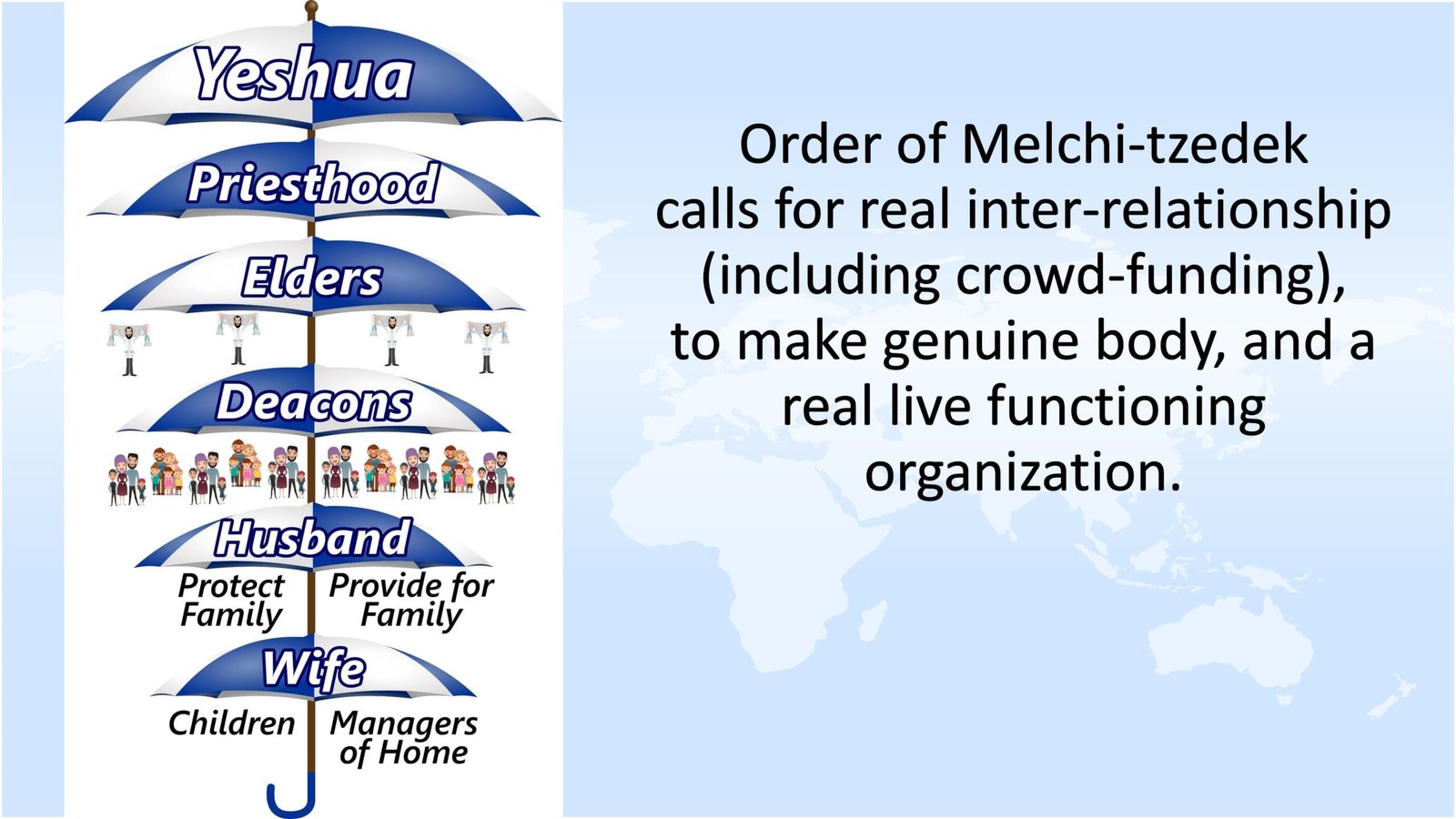
- Yaakov (Nasi of separated priesthood)
- Shaul (Shaliach Gadol of separated priesthood)
- Titus (Shaliach Katan of separated priesthood)
- Elders (non-separated)
- Deacons (non-separated)
- Disciples (non-separated)
The Nazarene Sanhedrin (Beit Din Gadol)
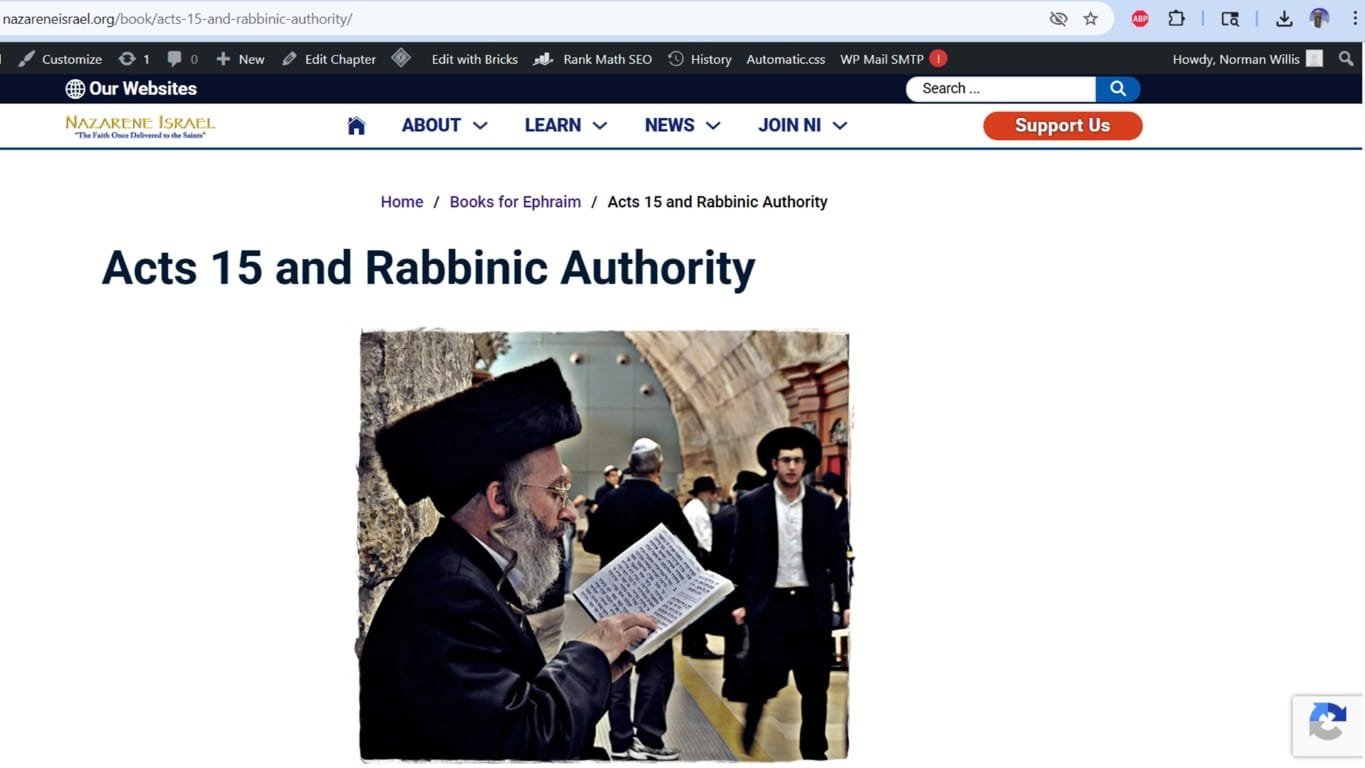
Willis also highlights Acts 15 and Acts 21, where the apostles and elders convened in Jerusalem to make binding doctrinal rulings. This “Nazarene Sanhedrin” functioned as a supreme court of appeals for early believers. When Paul (Shaul) was given directives by James (Yaakov) and the Jerusalem elders, he submitted to their authority. This proves that hierarchical leadership was undeniably authorized by the first-century apostles.
Ma’asei (Acts) 15:1-2
1 And certain men came down from Judea and taught the brethren, “Unless you are circumcised according to the custom of Moshe, you cannot be saved.”
2 Therefore, when Shaul and Bar Naba had no small dissension and dispute with them, they determined that Shaul and Bar Naba and certain others of them should go up to Jerusalem, to the apostles and elders, about this question.Ma’asei (Acts) 15:5-6
5 But some of the sect of the Pharisees who believed rose up, saying, “It is necessary to circumcise them, and [then] to command them to keep the Torah of Moshe.”
6 Now the [foundation of] apostles and elders came together to consider this matter.
(Beit Din Gadol)
(Giur Process)
Ma’asei (Acts) 15:19-20
19 “Therefore I judge that we should not trouble those from among the Gentiles who are (re-)turning to Elohim,
20 but that we write to them to abstain from things polluted by idols, from sexual immorality, from things strangled, and from blood….Ma’asei (Acts) 15:21
21 “For Moshe has had throughout many generations those who preach him in every city, being read in the synagogues every Sabbath.”
Ma’asei (Acts) 16:4
4 And as [Shaul and Timothy] went through the cities, they delivered to them the decrees to keep, which were determined by the apostles and elders at Jerusalem.Ma’asei (Acts) 21:18-19
18 On the following day Shaul went in with us to Yaakov [HaNasi], and all the elders were present.
19 When he had greeted them, he told in detail those things which Elohim had done among the Gentiles through his ministry.
(Foundation of apostles and elders, aka Beit Din Gadol.)
Ma’asei (Acts) 21:23
23 Therefore do what we tell you: We have four men who have taken a vow.
(Foundation of apostles and elders, aka Beit Din Gadol.)
The Vision for a Unified Ministry Kingdom
A recurring theme in Willis’s critique is the current disorganized state of the “Messianic mob.” He notes a stark contrast between Judah—which historically understands the necessity of structured hierarchy—and Ephraim, which often resists authority and opts for “Torah-lite” teachings.

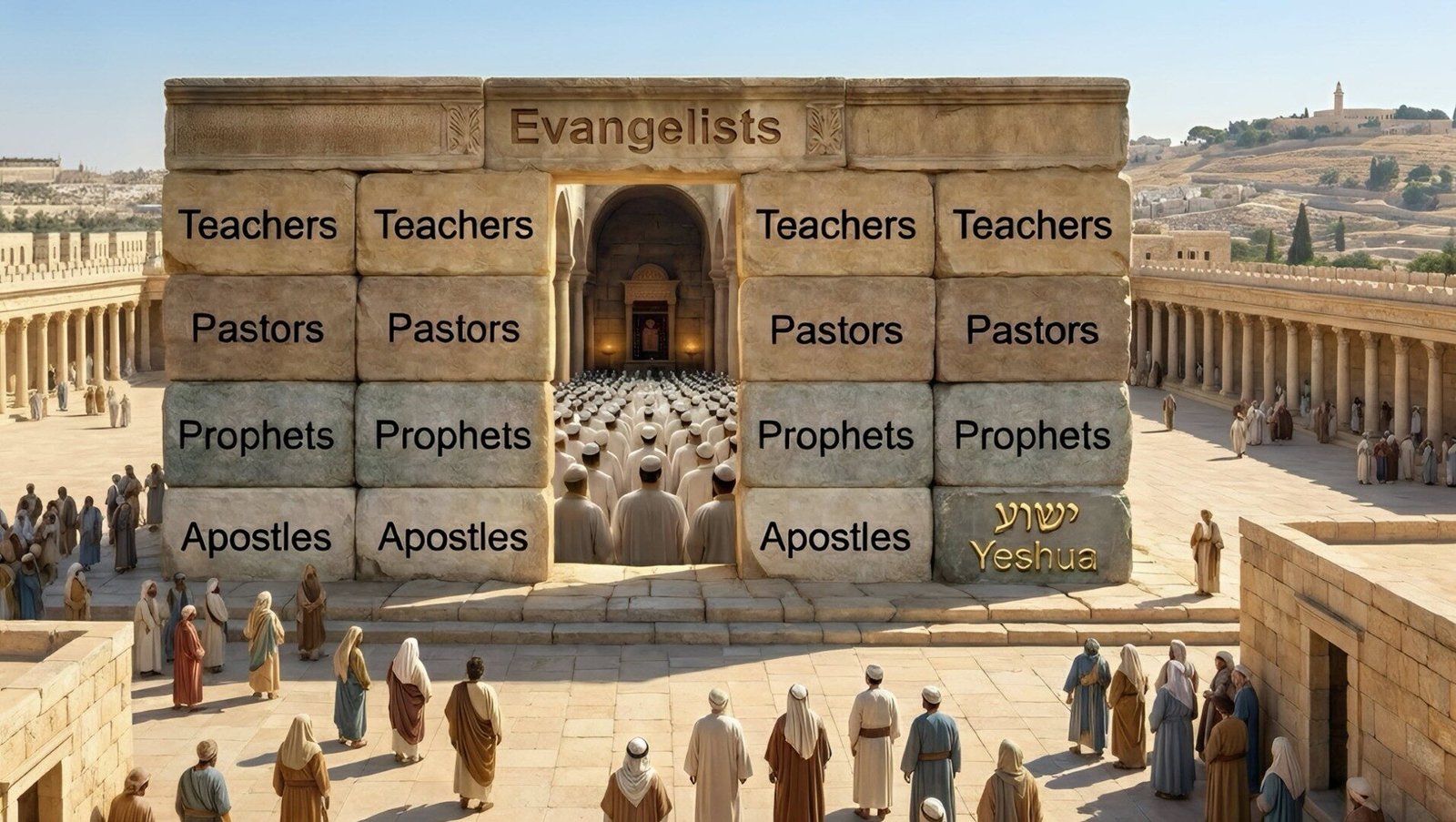
Quoting Ephesians 4:11, Willis reminds viewers that Yeshua instituted the five-fold ministry (apostles, prophets, evangelists, pastors, and teachers) specifically to equip the saints and unify the faith. Rejecting this ordained structure leaves believers acting as independent, disconnected stones, rather than a carefully fitted, global living temple.
Ephesim (Ephesians) 2:19-20
19 Now, therefore, you are no longer strangers and foreigners, but fellow citizens with the set-apart ones and members of the household of Elohim,
20 having been built on the foundation of the apostles and prophets, Yeshua HaMashiach Himself being the chief cornerstone…
Ephesim (Ephesians) 2:19-20
19 Now, therefore, you are no longer strangers and foreigners, but fellow citizens with the set-apart ones and members of the household of Elohim,
20 having been built on the foundation of the apostles and prophets, Yeshua HaMashiach Himself being the chief cornerstone…Ephesim (Ephesians) 2:21-22
21 in whom the whole building, being fitted together, grows into a set-apart temple in Yahweh,
22 in whom you also are being built together for a dwelling place of Elohim in the Spirit.
VERSUS:
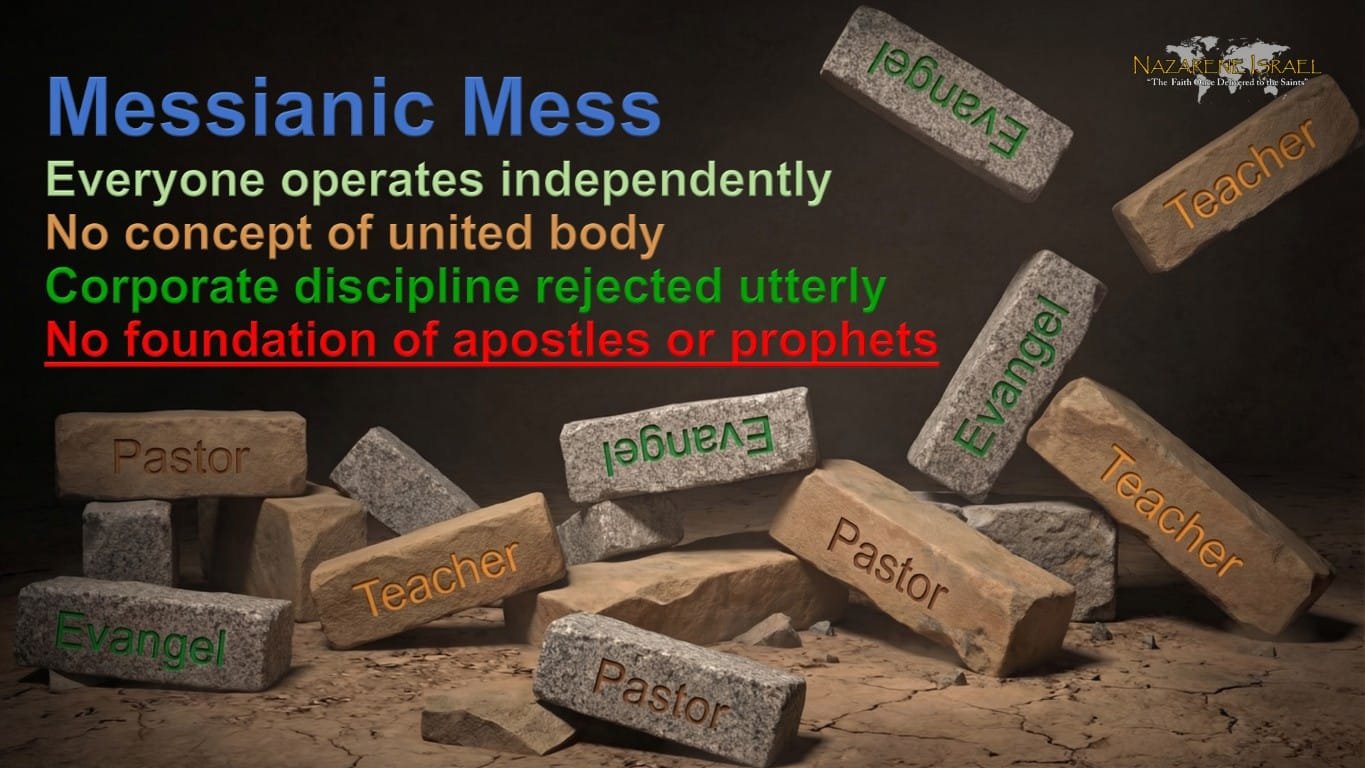
Ephesim (Ephesians) 4:11-12
11 And He Himself gave some to be apostles, some prophets, some evangelists, and some pastors and teachers,
12 for the equipping of the set-apart ones for the work of ministry, for the edifying of the body of Mashiach,
(How many bodies are there?)
(How many ministries?)
Ephesim (Ephesians) 4:13-14
13 till we all come to the unity of the faith and of the knowledge of the Son of Elohim, to a perfect man, to the measure of the stature of the fullness of Mashiach;
14 that we should no longer be children, tossed to and fro and carried about with every wind of doctrine, by the trickery of men, in the cunning craftiness of deceitful plotting…Ephesim (Ephesians) 4:15-16
15 but, speaking the truth in love, may grow up in all things into Him who is the head—Mashiach—
16 from whom the whole body, joined and knit together by what every joint supplies, according to the effective working by which every part does its share, causes growth of the body for the edifying of itself in love.
Conclusion: A Call to Build the Tree of Joseph
Norman Willis concludes his teaching with a heartfelt plea for unity and repentance. Acknowledging Michael Rood’s immense talent and evangelistic reach, Willis urges him—and other independent teachers—to align with the original blueprint of the first-century Nazarene Israel sect. By embracing biblical order and supporting a standing priesthood, Willis believes the scattered body of believers can finally build the unified, lasting kingdom that Yeshua intended.
The Beit Din Gadol (Great Court), historically known as the Great Sanhedrin, was the supreme judicial and religious authority in ancient Israel, consisting of 71 sages who sat in the Second Temple in Jerusalem. It functioned as the final court of appeal, handled high-level legal/religious disputes, and addressed national affairs.
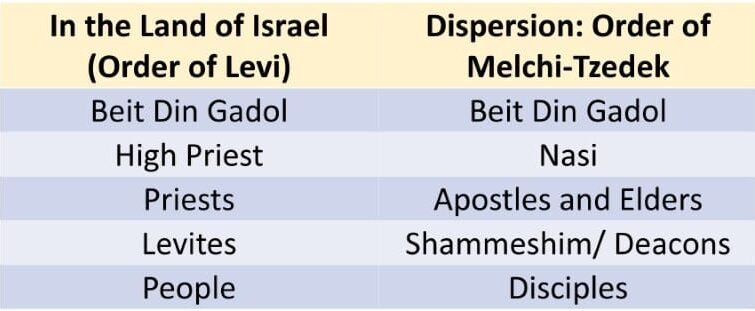
Ma’asei (Acts) 6:1-2
1 Now in those days, when the number of the disciples was multiplying, there arose a complaint against the Hebrews by the Hellenists, because their widows were neglected in the daily distribution….
2 Then the twelve summoned the multitude of the disciples and said, “It is not desirable that we should leave the word of Elohim and serve tables.”Ma’asei (Acts) 6:3-5
3 “Therefore, brethren, seek out from among you seven men of good reputation, full of the Set-apart Spirit and wisdom, whom we may appoint over this business;
4 “but we will give ourselves continually to [corporate] prayer and to the ministry of the word.”
5 And the saying pleased the whole multitude.
For more on the topic of the standing priesthood, please watch “Why the Renewed Covenant Requires a Standing Priesthood”.
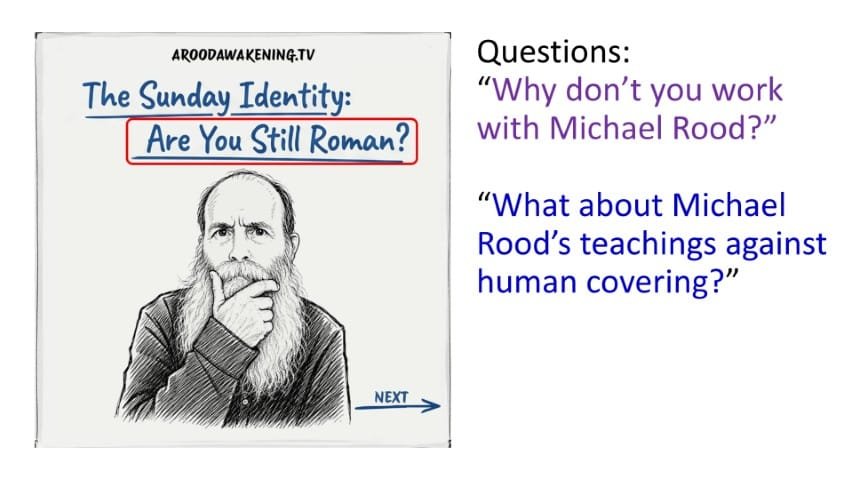
Michael’s HIDDEN Assumptions:
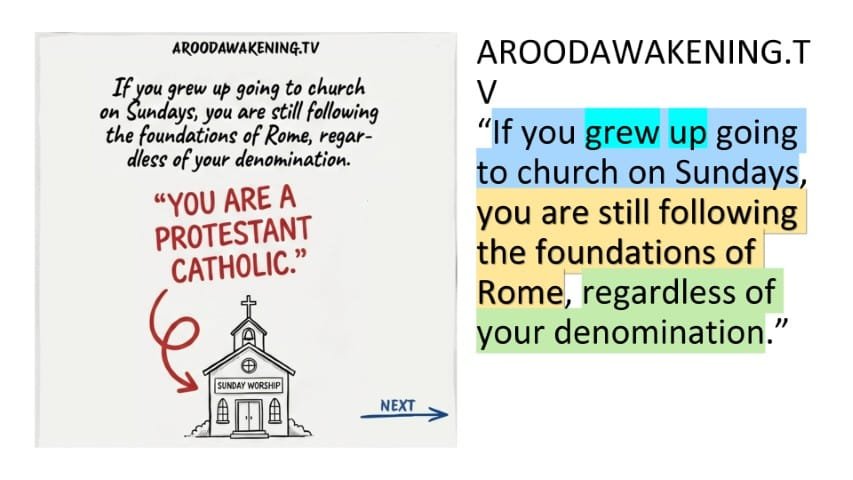
1. Order and organization is “of Rome” (i.e., Esav, i.e., “the Mystery Babylonian Church system”).
2. If you advocate leadership (i.e., apostles, elders, deacons, etc.), you are “of Rome” (i.e., Mystery Babylon).
3. The body should have no leaders.
4. No one should determine doctrine for the body.
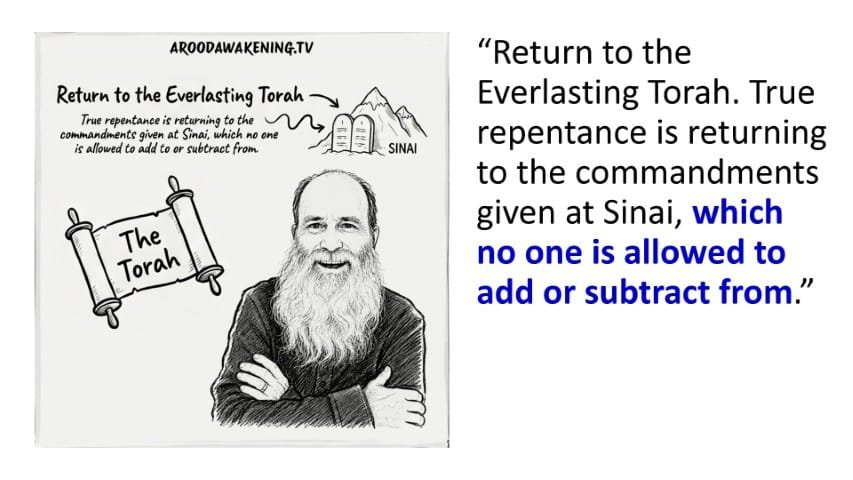
5. Reading Torah is the same as keeping Torah.
6. If you read from Torah there is nothing more to do (except donate to his ministry for “setting you free”).
7. There was no change in the operational Torah when Yeshua instituted the “new wineskins” model to bring lost Ephraim (Joseph) home (Hebrews 7:12).
8. Passages like Acts 2, 4, 6, 15, 21, 1 Timothy 3, Titus 1, and Ephesians 2 & 4 can be safely ignored.
Kepha Bet (2 Peter) 3:15-16
15 and consider that the longsuffering of our Master is salvation—as also our beloved brother Shaul, according to the wisdom given to him, has written to you…
16 as also in all his epistles, speaking in them of these things, in which are some things hard to understand, which untaught and unstable people twist to their own destruction, as they do also the rest of the Scriptures.
Yehudah (Jude) 1:3-4
3 Beloved, while I was very diligent to write to you concerning our common salvation, I found it necessary to write to you exhorting you to contend earnestly for the faith which was once for all delivered to the set-apart ones.
4 For certain men have crept in unnoticed, who long ago were marked out for this condemnation, unrighteous men, who turn the favor of our Elohim into lewdness and deny the only Master Yahweh and our Master Yeshua HaMashiach….Yehudah (Jude) 1:8
8 …Likewise also these dreamers defile the flesh, reject authority, and speak evil of dignitaries.
(Anarchy.)
TimaTheus Aleph (1 Timothy) 3:1
1 This is a faithful saying: If a man desires the position of a bishop [zakan], he desires a good work.
2 A bishop then must be blameless, the husband of one wife, temperate, sober-minded, of good behavior, hospitable, able to teach…Strong’s Greek Concordance G1984
ἐπισκοπή episkopē ep-is-kop-ay’
From G1980; inspection (for relief); by implication superintendence; specifically the Christian “episcopate”: – the office of a “bishop”, bishoprick, visitation.Thayers G1984 ἐπισκοπή episkopē:
1) investigation, inspection, visitation…
1b) oversight
1b1) overseership, office, charge, the office of an elder
1b2) the overseer or presiding officers of a Christian churchMa’asei (Acts) 14:23
23 So when they had appointed elders in every assembly, and prayed with fasting, they commended them to the Master in whom they had believed.Ma’asei (Acts) 20:17
17 From Miletus he sent to Ephesus and called for the elders of the assembly.Strong’s Greek Concordance G4245
πρεσβύτερος presbuteros pres-boo’-ter-os
Comparative of πρέσβυς presbus (elderly); older; as noun, a senior; specifically an Israelite Sanhedrist (also figuratively, member of the celestial council) or Christian “presbyter”: – elder (-est), old.Thayer’s Definition for Strong’s Concordance G4245
2a1) members of the great council or Sanhedrin (because in early times the rulers of the people, judges, etc., were selected from elderly men)…
2b) among the Christians, those who presided over the assemblies (or churches) The NT uses the term bishop, elders, and presbyters interchangeably.
Ma’asei (Acts) 20:29-30
29 “For I know this, that after my departure savage wolves will come in among you, not sparing the flock.
30 “Also from among yourselves men will rise up, speaking perverse things, to draw away the disciples after themselves.”
Romim (Romans) 16:17-18
17 Now I urge you, brethren, note those who cause divisions and offenses, contrary to the doctrine which you learned, and avoid them.
18 For those who are such do not serve our Master Yeshua HaMashiach, but their own belly, and by smooth words and flattering speech deceive the hearts of the simple.Qorintim Aleph (1 Corinthians) 1:10
10 Now I plead with you, brethren, by the name of our Adon Yeshua HaMashiach, that you all speak the same thing, and that there be no divisions among you, but that you be perfectly joined together in the same mind and in the same judgment.Qorintim Aleph (1 Corinthians) 1:11-12
11 For it has been declared to me concerning you, my brethren, by those of Chloe’s household, that there are contentions among you.
12 Now I say this, that each of you says, “I am of Shaul,” or “I am of Apollos,” or “I am of Kepha,” or “I am of Mashiach.”
(“I do not follow any man!! I only follow Yeshua!!”)
Qorintim Aleph (1 Corinthians) 1:12 [REAL Version]
12 Now I say this, that each of you says,
“I am of ‘A Lukewarm Awakening’ Ministries,” or
“I am of ‘In Search of Esav’s Paths’ Ministries,” or
“I am of ‘Sighted Book Sales,” or
“I pretend to obey Yeshua (when really I do whatever I want)!”
Do you operate on a unified foundation of apostles and prophets? (Y/N?)
Qorintim Aleph (1 Corinthians) 1:13, 17
13 Is Mashiach divided? Was Shaul crucified (or nailed) for you? Or were you immersed in the name of Shaul? …
17 For Mashiach did not send me to immerse, but to preach the Good News, not [just] with wisdom of words, lest the cross [or stake] of Mashiach should be made of no effect.
(Meaning, no kingdom.)

Prayer:
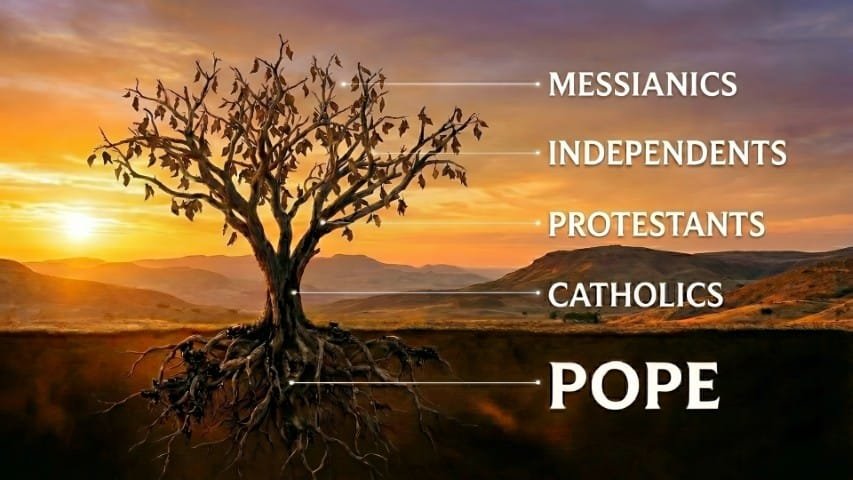
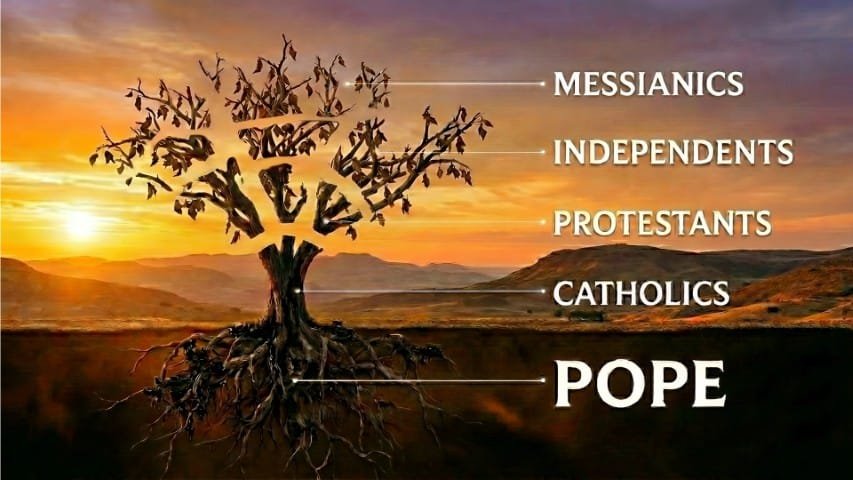
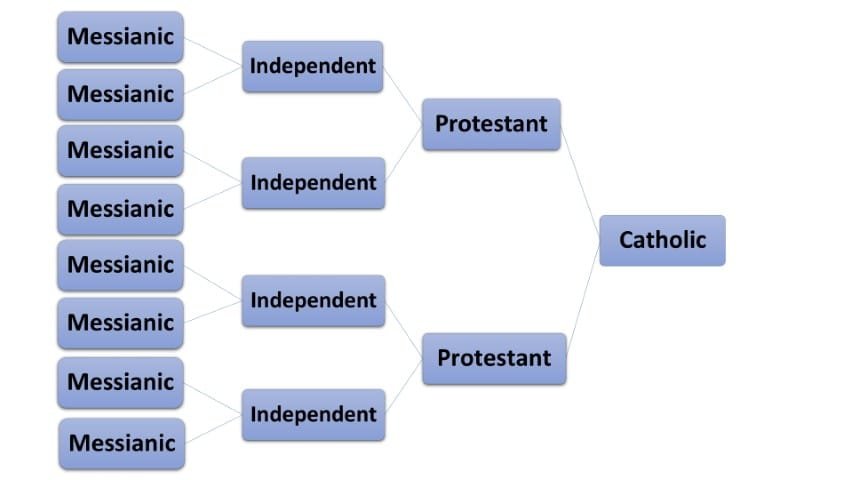
Please pray that Michael Rood and other highly intelligent and capable leaders like him in all languages will take these verses to heart, and live by them, and help us to grow the Tree of Joseph according to Scripture, so the house of Joseph can unite, and finally come home.
↓ Watch “Why The Renewed Covenant REQUIRES A STANDING PRIESTHOOD” here! ↓
Shalom.
Support the Great Commission on PayPal
Support the Great Commission on Patreon